
Weekly Newsletter | March 27, 2020
Issues
Interior criticized for maintaining normalcy amid pandemic. Last week, the Interior Department (DOI) closed the 30-day comment period for a measure that would further define the regulatory language governing the Migratory Bird Treaty Act (MBTA), and clarify the legal role of MBTA while curtailing the legal blowback law-abiding companies face. Now, critics are calling for an extension of the comment period and overall regulatory slowdown while the public is preoccupied with the COVID-19 pandemic.
A coalition of green groups wrote to the agency asking it to suspend all of its public comment periods during the outbreak and cited the recent closure of the public comment period for MBTA amendments.
“At a time when people are focused on their families and themselves (…) the Department of Interior, they should put a halt to this in recognition that the public is otherwise preoccupied,” said Randi Spivak, the Center for Biological Diversity’s public lands program director.
Environmentalists argue that the administration should also temporarily suspend its oil and gas lease sales on public lands, an argument that has resonated on the other end of the political spectrum. In response, DOI is rejecting claims that the timeframe for MBTA was anything but standard and fair; Interior spokesman Conner Swanson called it “unfortunate that these interest groups are playing politics at a time when all Americans need to come together.”
“All DOI actions, including comment periods and lease sales, are being evaluated on a case-by-case basis and adjustments are being made to ensure we are allowing for proper public input, while protecting the health and safety of the public and our employees,” the spokesperson said.
By official count, more than 9,000 public commenters have taken advantage of the opportunity to respond to Interior’s MBTA proposal. The Center for Biological Diversity, for example, attached 21,162 comments to their submission on the final day of the public comment period.
As Interior forges ahead, industry continues to stand behind Interior’s refinement of MBTA as well as their steadfastness on regulatory progress, with the Ohio-based Buckeye Institute think tank being the latest to speak out, saying “prosecuting ‘incidental takings’ of migratory birds threatens businesses across industries with criminal penalties for otherwise lawful conduct.”
For more regarding industry’s commitment to protecting migratory birds, read the Independent Petroleum Association of America’s full comment submission here on the Federal Register.
In the News
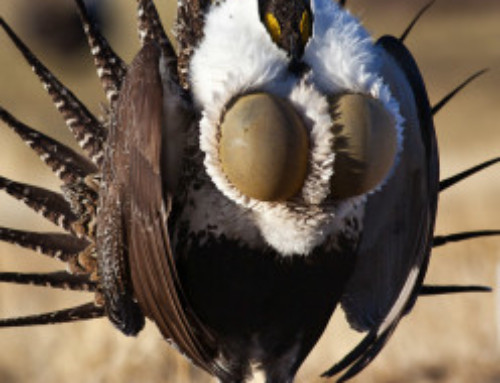
Groups Target BLM Logging Plan That Aims to Help Sage-Grouse. Bloomberg Government, Sub req’d. Projects that would cut and “masticate” up to 10,000 acres at a time of pinyon and juniper trees on Western public lands could be approved without environmental review, under an Interior Department proposal. The plan from the Bureau of Land Management justifies the exemptions as a way to benefit the chicken-sized greater sage-grouse bird. Environmental groups say that’s unlikely. They’re also calling for Interior to extend a 30-day public comment period on the proposal, which ends April 13 and falls during the coronavirus crisis. Western states, including Wyoming and Colorado, and the federal government have been working to protect the greater sage-grouse and prevent it from getting listed under the Endangered Species Act. The bird faces threats from oil and gas development, housing, roads, and wildfires. “There can certainly be a benefit to well thought-out and designed treatment projects,” said Nada Culver, senior policy counsel for the National Audubon Society. “But the scale of this can cause a lot of harm, as well, to species like sage-grouse and, of course, the pinyon jay, which depends on the habitat under consideration.”
How will sea turtle nesting season weather the pandemic? E&E News, Sub req’d. Social distancing during the coronavirus pandemic could have both positive and negative outcomes for sea turtle nests, according to experts looking ahead to the coming U.S. nesting season. “Less people on beaches, less people driving on beaches may have some strange positive impact on nesting,” said Todd Steiner, the executive director of the Turtle Island Restoration Network. “While at the same time it has a negative impact because we’re not able to ensure that those nests are properly marked or moved out of the way, of harm’s way.” Steiner said “nests get crushed” when more cars are driving on the beach or people set up their umbrellas. But while beach closures decrease human activity, they also limit the number of people monitoring the nests. “All the obvious issues around travel, around social distancing make a lot of this work extremely difficult, being done with skeleton crews instead of larger groups of volunteers,” Steiner said.
Greens seek to resurrect power plant, Navajo mine dispute. E&E News, Sub req’d. Environmental groups are asking the Supreme Court to give them another shot at challenging a coal-fired power plant and adjacent strip mine in New Mexico. The 9th U.S. Circuit Court of Appeals last year rebuffed the groups’ plea to scrap an Interior Department permit for an expansion of the Four Corners power plant and mine on Navajo Nation land near Farmington, N.M. Judges for the 9th Circuit agreed with a lower court that the green groups could not sue over the permit allowing Arizona Public Service Co. to operate the facility through 2041 without the involvement of Navajo Transitional Energy Co. (NTEC). But because NTEC is an arm of the Navajo tribe, the court found that its sovereign immunity insulates it from the litigation and granted the company’s request to dismiss the case.
EPA Issues Revised Method for Conducting Biological Evaluations of Pesticides under the Endangered Species Act. National Law Review. On March 12, 2020, the U.S. Environmental Protection Agency (EPA) announced the publication of its Revised Method for National Level Listed Species Biological Evaluations of Conventional Pesticides (Revised Method), a method for conducting Biological Evaluations under the Endangered Species Act (ESA). The Revised Method will be used by EPA to evaluate potential risks from pesticides to federally listed endangered and threatened species and to make effects determinations during initial registration and as part of periodic registration review. The Revised Method allows EPA to include historical usage data that reflects where and how certain pesticides have been applied to make predictions about the future.
Budget ‘cut’ sends mixed law enforcement message. E&E News, Sub req’d. Last month, the Interior Department proposed eliminating law enforcement funding for the Indian Arts and Crafts Board. This month, department officials congratulated the three newest Fish and Wildlife Service special agents to graduate from training and secure assignment to the small agency that enforces truth-in-advertising claims for American Indian-made products. More than a mixed message, the give-and-take involving the Indian Arts and Crafts Board illustrates the ephemeral nature of the department’s $12.7 billion budget request for fiscal 2021. It’s packed with reductions that even Interior officials concede will never fly. “The president proposes,” Interior Secretary David Bernhardt volunteered to a House Appropriations panel earlier this month, “and the Congress completely disposes.” In every administration’s budget proposals, examples abound of short-lived paper cuts. Last year, for instance, Interior proposed saving $53.5 million by cutting out the Cooperative Endangered Species Conservation Fund. Congress blew off the proposal and provided $54.5 million. This year, Interior again proposed eliminating funding.
Enviros sue to protect Yellowstone bison. E&E News, Sub req’d. The Yellowstone-area bison is back in court, with conservation groups filing a new lawsuit aimed at securing Endangered Species Act protections for the shaggy beast. In the latest chapter of a long-running dispute, the Western Watersheds Project and two allied groups assert that the Fish and Wildlife Service unlawfully rejected their petition to list the distinct population segment of Yellowstone bison under the ESA. “It is long past time for the Service to make a reasonable and justifiable determination about whether these bison deserve protections under the ESA,” said Josh Osher, Western Watersheds Project’s policy director, adding that “bison are being killed at an alarming rate.” Friends of Animals and the Buffalo Field Campaign joined in the lawsuit, filed in the U.S. District Court for the District of Columbia. Last September, the Fish and Wildlife Service determined in a so-called 90-day finding that further study was not needed into whether the Yellowstone-area bison is threatened or endangered.
AI Analysis Shows Improvement in Conservation of Endangered Species. Courthouse News Service. Researchers using artificial intelligence to grade decades of conservation efforts have determined we’re getting better at reintroducing once-endangered species to the wild. In their study published Thursday in the journal Patterns, the researchers analyzed the abstracts of more than 4,000 studies of species reintroduction across four decades and found that we’re generally improving in our conservation efforts. The authors hope that machine learning could be used in this field, as well as others, to discover the best techniques and solutions from the ever-growing plethora of scientific research. “We wanted to learn some lessons from the vast body of conservation biology literature on reintroduction programs that we could use here in California as we try to put sea otters back into places they haven’t roamed for decades,” said senior author Kyle Van Houtan, chief scientist at Monterey Bay Aquarium in California.
Judge declines to halt pipeline after NEPA challenge. E&E News, Sub req’d. The Permian Highway pipeline project can move forward for now despite concerns about the project’s destruction of habitat for golden-cheeked warblers and other endangered species, a district judge ruled last week. Judge Robert Pitman for the U.S. District Court for the Western District of Texas declined to temporarily halt progress on the natural gas project, but raised concerns about both the Fish and Wildlife Service’s analysis and project developer Kinder Morgan Inc.’s construction process. Pitman, an Obama appointee, noted a high bar for issuing a preliminary injunction in the case. “Whatever harm resulted from Kinder Morgan’s past clearing activities cannot be remedied through a preliminary injunction. And because these past harms cannot be prevented by a preliminary injunction, they cannot form the basis of preliminary injunctive relief,” Pitman wrote. Still, an attorney for challengers of the project said the judge saw flaws in Kinder Morgan’s process for building the 430-mile pipeline, which would carry natural gas from Texas’ Permian Basin to the state’s Gulf Coast.
Famous frog back in spotlight as Trump admin launches review. E&E News, Sub req’d. The judicially renowned dusky gopher frog will get a serious checkup that could cause a lessening of Endangered Species Act protections, the Fish and Wildlife Service announced today. A species whose habitat designation once captivated the Supreme Court, the amphibian is one of 25 Southeastern species now slated for a “5-year status review” under the Endangered Species Act. Currently listed as endangered, the dusky gopher frog could, in theory, be recommended for downlisting to threatened or even for removal from the ESA list altogether, although either option might appear unlikely. “A 5-year review considers the best scientific and commercial data that have become available since the current listing determination or most recent status review of each species,” FWS noted today. The 60-day public comment period that opens tomorrow marks a return to the spotlight, albeit a modest one, for the frog that inhabited a 2018 Supreme Court decision and prompted an ongoing FWS review of the concept of critical habitat