
Weekly Newsletter | April 24, 2020
Issues
Green Groups Allege EPA’s COVID-19 Enforcement Policy Violates ESA. Environmentalists are preparing a lawsuit against the Environmental Protection Agency (EPA) for its enforcement discretion policy amid the COVID-19 pandemic, according to recent media reports. In a letter to the EPA, the Center for Biological Diversity said the agency did not do its due diligence required by the Endangered Species Act (ESA) by reviewing how excess pollution might affect nearby plants and animals.
The threat comes less than a week after other environmental groups challenged the policy under the Administrative Procedure Act.
On March 26, the EPA issued a memo alerting industries the federal agency would not seek fines or penalties from companies that fail to monitor their pollution levels required under various laws like the Clean Air Act and Clean Water Act. The policy is temporary but has no set end date.
The Center for Biological Diversity says the policy will “needlessly place endangered and threatened species at risk.” Other environmental groups have called it a license to pollute. And while the EPA under the directive requires companies to document when they did not monitor for pollution and explain how COVID-19 has influenced their monitoring capabilities, environmental groups argue it’s too little too late, as the pollution will have already been emitted.
The agency pushed back in a statement, saying Tuesday that its “enforcement authority and responsibility remains active and does not allow for any increases in emissions. Any claims made to the contrary are just false.”
In a statement to The Hill, an EPA spokesperson also said the policy only waives penalties for not conducting routine record keeping and monitoring and if “on a ‘case-by-case’ basis, EPA agrees that the public health emergency was the cause.”
“The policy only forgives penalties for failure to carry out routine record keeping and monitoring and only if, on a ‘case-by-case’ basis, EPA agrees that the public health emergency was the cause. …For all other COVID-19 caused noncompliance, the policy only says EPA will consider the circumstances when determining an appropriate response.”
Denying further comment, the EPA said it would not provide a statement on “threatened litigation.”
In the News
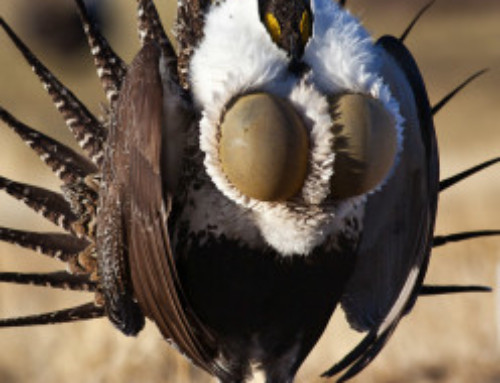
Lawsuit filed to stop Idaho-Wyo. Pipeline. E&E News, Sub req’d. Two environmental groups filed a federal lawsuit yesterday to stop a proposed underground natural gas pipeline from Idaho to Wyoming, saying it would harm protected grizzly bears and other wildlife. The Alliance for the Wild Rockies and Yellowstone to Uintas Connection filed the lawsuit against the U.S. Forest Service. The groups contend that Forest Service approval of the Crow Creek pipeline project in November violated the Endangered Species Act. The groups also said the Forest Service violated its own requirements involving sage grouse contained in its 2015 forest plan. Wyoming-based Lower Valley Energy wants to build the pipeline that would start near Montpelier, Idaho, and run to Afton, Wyo. The company on its website says it has some 5,000 natural gas customers in Afton. The company has been trucking natural gas to the town, but officials say delivery has been unreliable and the town has nearly run out several times. Lower Valley Energy spokesman Brian Tanabe didn’t immediately return a call yesterday seeking further comment. The Department of Justice, which defends federal agencies in lawsuits, didn’t immediately respond to an inquiry.
Trump admin to finalize its WOTUS rule tomorrow. E&E News, Sub req’d. The Trump administration is set to finalize tomorrow its controversial definition of what waterways qualify for protections under the Clean Water Act, setting the stage for a protracted legal battle. According to the Federal Register, EPA and the Army Corps of Engineers’ Navigable Waters Protection Rule will be published tomorrow morning. The rule defines the scope of what streams and wetlands are jurisdictional under the law. The Trump administration released the rule in January, but its implementation has been on hold until publication. Publication also represents a starting gun for what is likely to be countless lawsuits from states, environmental groups and some conservative interests challenging the rule’s potential impacts on a wide range of issues, including endangered species. The rule is significantly narrower in scope than its predecessor, the Obama-era Waters of the United States, or WOTUS, rule. It would remove protections from a majority of the country’s wetlands and at least 18% of streams. EPA has said it is confident the rule will survive the challenges.
Trump may ease regulations during pandemic. E&E News, Sub req’d. The White House is considering suspending or repealing regulations in order to boost business amid the COVID-19 pandemic. The plans are still in the works, and some ideas are reportedly borrowed from conservative Washington think tanks and trade groups that push for dismantling Obama-era environmental regulations limiting air and water pollution. Judd Deere, a White House spokesman, touted the administration’s deregulatory agenda and stressed the president’s desire to send Americans “back to work.” “President Trump’s policies of low taxes, deregulation, reciprocal trade, and energy independence took this economy to record setting historic highs for all Americans, and they will do so again,” he wrote via email. “The President wants to see this country safely open again so Americans can get back to work and every action he has taken throughout this pandemic has been to ensure we emerge healthy, stronger, and with a growing, prosperous economy.”
Enforcement policy faces Endangered Species Act pushback. E&E News, Sub req’d. Another legal challenge now confronts EPA’s decision last month to relax certain pollution monitoring and reporting requirements during the COVID-19 pandemic. Citing potential threats to protected species, the Center for Biological Diversity filed a notice of intent to sue EPA for alleged violations of the Endangered Species Act. A lawsuit comes next, unless the agency offers remedies that satisfy the environmentalists. “While people should certainly not be put at undue risk, the Trump administration must not be allowed to use this pandemic to give polluters free rein to foul our air and water and hurt wildlife,” CBD attorney Jared Margolis said in a statement. On Thursday, the Natural Resources Defense Council filed a related lawsuit in the U.S. District Court for the Southern District of New York to order the agency to require published notifications from companies when they cannot meet air and water pollution obligations (Greenwire, April 16). NRDC joined more than a dozen other conservation organizations in its suit, which was brought under different grounds than those cited by CBD. The Heritage Foundation recently launched a recovery commission made up of 17 members who include former lawmakers and experts. One of the commission’s recent recommendations for EPA is a fast-track approval process for testing disinfectant technologies and protective equipment.
‘A big deal’: Keystone XL ruling could threaten other pipelines. E&E News, Sub req’d. A sweeping court ruling last week that halted construction of the Keystone XL pipeline through waterways set off alarm bells for some energy industry analysts. Experts warned that the U.S. District Court for the District of Montana’s broad order withdrawing a nationwide Clean Water Act permit for the crude oil project connecting Canada’s oil sands to the Gulf of Mexico could also affect a pair of East Coast natural gas pipelines and an oil sands conduit between Canada and Wisconsin. “This is a big deal,” said Christi Tezak, managing director of ClearView Energy Partners LLC. Chief Judge Brian Morris for the Montana district court sided with environmental groups’ complaints that the Army Corps of Engineers had failed to perform a multiagency consultation mandated under the Endangered Species Act to assess the risks of its Nationwide Permit 12 ahead of the program’s five-year renewal in 2017. The Army Corps has used the nationally applicable permitting program for years to fast-track the review of projects like pipelines and transmission lines that meet specific criteria and are deemed to have minimal impact on federal waterways.
Lawsuit: FWS gas report violated Endangered Species Act. E&E News, Sub req’d. Two environmental groups have filed a lawsuit this week challenging the Fish and Wildlife Service for failing to assess the harms of a Texas liquefied natural gas project to the endangered ocelot. Defenders of Wildlife and the Sierra Club contend the federal agency got it wrong when it found in its biological opinion for the Annova LNG terminal in Brownsville that the project did not jeopardize the wildcat. Defenders of Wildlife said there were just an estimated 60 ocelots remaining in South Texas living in the Laguna Atascosa National Wildlife Refuge and on private lands. It called FWS’s decision to issue a “no jeopardy opinion” arbitrary and capricious and said it went against the best available science. “We are claiming that the local community impacts are enough to support a jeopardy opinion, there are three different LNG facilities [in the area], we are claiming the cumulative effects are enough,” said Bryan Bird, Southwest program director for Defenders of Wildlife. The lawsuit filed in the 5th U.S. Circuit Court of Appeals in New Orleans is the second of two challenges to the Interior Department’s biological analyses on LNG terminals in Texas. The first was on the federal review for the proposed Rio Grande LNG project filed in the 5th Circuit last week.
Amazon parakeet makes recovery progress, E&E News, Sub req’d. The Fish and Wildlife Service used Earth Day this morning to announce some Endangered Species Act progress, with the completed downlisting of the golden parakeet from endangered to threatened status. The move does not go as far as hoped for by some bird breeders, who along with the conservative Pacific Legal Foundation had pressed the federal agency to remove or at least modify federal protections for the vibrantly colored creature also known as the golden conure (E&E News PM, July 20, 2017). But the Fish and Wildlife Service, while agreeing to relax some measures, cautioned that the South American bird remains vulnerable. “Changes in Brazil’s climate and associated changes to the landscape are likely to result in additional habitat loss for the golden conure,” FWS noted, citing both “land-use change from deforestation and climate changes due to global warming.” About one-third of the golden conure’s range has already been lost to deforestation, and another 23% to 30% of the bird’s habitat is predicted to be lost within 22 years or three generations, according to FWS.