
Weekly Newsletter | May 1, 2020
Issues
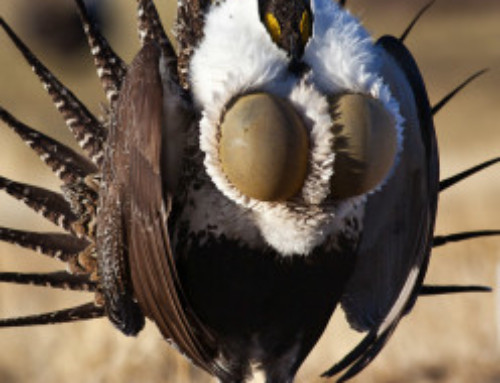
NGO Mishandled Funds for Lesser Prairie Chicken Recovery. An internal audit by a Colorado-based conservation investment advisory firm suggests a nonprofit group, Western Association of Fish and Wildlife Agencies (WAFWA), mishandled funds meant to protect the lesser prairie chicken. The group was charged with implementing key components of a mostly voluntary federal recovery strategy to protect the bird, but instead spent large sums of money on an office building and staff salaries, according to the audit.
The audit evaluates the management of a species recovery foundation, overseen by WAFWA, that has raised roughly $60 million that is supposed to be used, among other things, to pay private landowners who are willing to place parcels into conservation easements critical to the lesser prairie chicken.
WAFWA administers the Lesser Prairie Chicken Range-wide Conservation Plan under the guidance of the Fish and Wildlife Service (FWS), which is currently reviewing the status of the bird for possible protection under the Endangered Species Act.
The audit concludes that the Range-wide Oil and Gas Candidate Conservation Agreement with Assurances program administered by WAFWA should be terminated.
Most of the problems uncovered by the audit center around WAFWA’s failure to place adequate financial accountability measures to ensure the millions of dollars being paid to landowners who agree to preserve private property that includes important lesser prairie chicken habitat is being used properly.
WAFWA, in a formal response to the audit, acknowledges the program’s shortcomings. But it states the components of the lesser prairie chicken plan are working and that it has “reduced threats by providing strong incentives for the oil and gas industry to co-locate facilities and reduce project footprints in the highest quality habitat” for the bird.
Chris Moore, WAFWA’s acting executive director, pointed to the detailed formal response to the audit, which he said was submitted to FWS but was “considered to be [an] internal, confidential document not for public distribution.”
The audit is being included in the annual report after FWS received several Freedom of Information Act requests for the document. WAFWA, in the formal response, lays out a series of steps the group has taken and plans to put in place shortly.
“Based on the Audit Report’s recommendations, WAFWA acted immediately to improve its short-term financial situation and overall organizational structure,” it says. “WAFWA continues to implement new procedures and approaches to address the recommendations from the audit.”
According to E&E News, Sub req’d, FWS cannot provide further comment on the audit.
“It would take us some time to read and digest the implications of the audit before we would be able to comment,” a spokesman said, “and clearly there is not enough time for us to do that here.”
FWS is currently reviewing the bird’s status and is expected to make a preliminary announcement on whether to list the bird for ESA protection by May 2021.
In the News
Judge rejects Army Corps’ bid to resume permitting. E&E News, Sub req’d. A federal court this week declined to immediately halt an order blocking the Army Corps of Engineers from authorizing national water permits for power line and pipeline projects that cross federally protected waters. Chief Judge Brian Morris for the U.S. District Court for the District of Montana said Tuesday that he would not issue an administrative stay to his order blocking the Army Corps’ Nationwide Permit 12 program, pending consultation with other federal agencies under the Endangered Species Act. The order stemmed from litigation over the controversial Keystone XL pipeline. Instead of only tossing the national permit for the oil pipeline’s water crossings, Morris faulted the agency for failing to conduct ESA consultation before reauthorizing the five-year program in 2017 and barred all use of the permit for project approvals. Federal attorneys quickly raised objections to the broad scope of the court’s decision, which could affect many more projects than just pipelines (Greenwire, April 28).
Komodo dragons scare up court fight over slow permitting. E&E News, Sub req’d. The Fish and Wildlife Service has prevailed, for now, in a legal challenge to its allegedly slow handling of a request to import Komodo dragons, but the fight over Endangered Species Act permits could soon flare up again. In the latest round of a recurring conflict, the Phoenix Herpetological Society complained FWS badly lagged in handling the import application filed in February 2018. Thirteen months later, when the suit was filed, the federal agency still had not acted. In July 2019, following a public comment period, FWS finally approved the amendment including Komodo dragons in the Phoenix Herpetological Society’s “captive bred wildlife” registration. That rendered the lawsuit moot, a federal judge ruled yesterday. “A case becomes moot … when the issues presented are no longer ‘live’ or the parties lack a legally cognizable interest in the outcome,” U.S. District Judge Amit Mehta wrote, quoting from a Supreme Court opinion.
Feds offer big bucks to solve wildlife killings. E&E News, Sub req’d. The Fish and Wildlife Service is luring potential tipsters with large cash rewards, including an especially juicy one for help in finding those who killed two endangered Mexican gray wolves in Arizona. With rewards already being offered following the suspicious deaths of a bald eagle, golden eagle and gray wolf in California, among other cases, FWS and its state partners are dangling up to $37,000 in the Mexican gray wolves mystery. This latest reward significantly exceeds the others. The federal agency, for instance, is offering up to $2,000 for information on who poisoned a golden eagle in southwest Wyoming four years ago, and $2,500 to help solve the December 2018 shooting death of the male wolf in Northern California. The reason for the rewards is simple: In fish and wildlife cases, money talks — or it can entice others to do so. “Paying rewards to people who provide critical information … that leads to results, such as fines or criminal convictions, is one of many tools that law enforcement agents can use to help them investigate and enforce wildlife trafficking laws,” the Government Accountability Office reported in 2018.
Feds drastically reduce snakes’ critical habitat. E&E News, Sub req’d. The Trump administration today proposed dramatically shrinking habitat protections for threatened snake species in the middle of a battle over an Arizona mine. Citing “relevant scientific research” and other information, the Fish and Wildlife Service proposed reducing the northern Mexican gartersnake’s designated critical habitat by 93% The designated habitat would shrink to approximately 27,784 acres, down from the approximately 421,423 acres proposed during the Obama administration. In a related action, FWS proposed decreasing the critical habitat for the narrow-headed gartersnake from the approximately 210,189 acres proposed earlier to approximately 18,701 acres. “We found that there was substantial scientific disagreement in the criteria we used to define what areas were occupied at the time of listing for each species, and the criteria we used to identify the lateral extent of critical habitat boundaries,” FWS stated. The agency also cited, in the proposal to be published tomorrow in the Federal Register, “additional information including locations of each species at the time of listing, and the biological needs and corresponding habitat characteristics of each species.”
Energy projects in chaos after permit shutdown. E&E News, Sub req’d. The Trump administration has halted national wetland permits for new oil and gas pipelines and power lines in a move that could tie up construction for months for industries already struggling in the coronavirus pandemic. The Army Corps of Engineers earlier this month suspended its Nationwide Permit 12 program with little fanfare after a federal court in Montana vacated a related permit for the Keystone XL pipeline. The move grinds to a halt approval of general permits under the national program, which fast-tracks permitting of projects that cross streams and wetlands that affect up to a half-acre of protected federal waters. Project developers still coping with the impacts of COVID-19 say the permitting snafu will add delays and increase costs. “All of my members use this permit,” said Emily Sanford Fisher, general counsel for the Edison Electric Institute, whose members include investor-owned utilities that provide electricity for more than 70% of all U.S. customers. “It’s not a good story.”
FWS marks plant’s recovery with word about warming. E&E News, Sub req’d. The newly announced recovery of the lowly Cumberland sandwort highlights how, even in the Trump administration, Fish and Wildlife Service scientists unequivocally acknowledge the consequential fact of global warming. In a modest Endangered Species Act success story, FWS today said the formerly endangered plant has recovered and no longer requires formal federal protection. The proposal also carries with it, though, a frank assessment of the Earth’s shifting climate. “Numerous long-term climate changes have been observed including changes in arctic temperatures and ice, widespread changes in precipitation amounts, changes in ocean salinity, and aspects of extreme weather including heavy precipitation and heat waves,” FWS noted. Quoting the Intergovernmental Panel on Climate Change’s conclusion that “evidence of warming of the climate system is unequivocal,” FWS calculated that temperatures will keep rising and soils keep drying across the southeastern United States. The Cumberland sandwort is a slender perennial that grows up to 6 inches tall and inhabits moist, shaded parts of Tennessee and one site in Kentucky.